
After collapsing at home on the couch after a vigorous velveting session down in Ward, Dr Nick Hansby noticed some little insects crawling around his arms. He was immediately evicted from the house. Over the last thirty years, many places have changed, from seeing a tick as being a rare occurrence to having significant outbreaks of Theilerea in dairy herds, anaemia in fawns, and hypersensitivity in horses with heavy burdens and scarred discarded velvet. The New Zealand cattle tick (Haemaphysalis longicornis) is endemic in many of the northern parts of the South Island, and there is a risk of it spreading further as temperatures warm up.
Life Cycle
In dealing with the parasite, we must understand its life cycle and habitat. It likes to be protected from the elements, thriving in thicker, bushy growth, rank grass, scrub, and moist gullies. It jumps onto many hosts, using them to move around, including wild animals, birds, and veterinarians’ arms. Unfortunately, it spends less than 20% of its life cycle on deer. It moves on and off the host three times during its life cycle (three feeding events). The larvae feed for 3-9 days, the nymphs feed for 3-8 days, and the adult ticks feed for 7-14 days. This means treating the animal on a regular basis is never going to get rid of the parasite. You must attack ticks with an integrated management plan, using chemical control treatments strategically combined with pasture and animal management. Simply applying a pour-on is not enough.
Tick control strategies
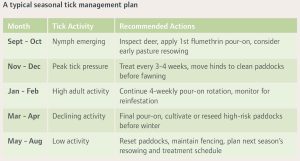
- Chemical controls – The mainstay tickicide in NZ is flumethrin pour-on. There are differing trade names, but they mostly contain the same ingredients. Apply as directed on the container (usually 3-6 weekly) during high-risk months (November-March). Resistance is not yet documented in NZ, but this does not mean it is not developing. Resistance has been documented overseas. To aid in delaying resistance, use the correct dose at the correct intervals and apply accurately. Combine with management techniques.
- Farm management techniques:
- Pasture and habitat – slash or spray rank grass, scrub and edge vegetation in deer lanes and paddocks.
- Grazing rotation – move mobs to low-risk paddocks after treatment, and avoid overgrazing moist gullies.
- Widlife control – minimise contact with feral deer, pigs and goats that help maintain the tick population.
- Monitoring – check animals regularly for ticks, especially pre-fawning hinds, and treat animals with high burdens early.
- Nutrition and stress – maintain good body condition and reduce crowding around fawn areas.

Pasture resowing
Resowing paddocks helps disrupt the tick life cycle, destroying habitats and exposing larvae to sunlight. Reseed the open canopy species, such as ryegrass, clover or chicory mixes.
Summary
The tick is a real risk to stock health and productivity. The monthly treatments of animals are only part of the control plan. As we are very reliant on one chemical type, resistance has to be considered a risk. Development of vaccines is possible with the breakdown of the tick genome, but this is some time away. An integrated strategy, as discussed, is the best approach at this time.
Consult with your Vetlife veterinarian to discuss your best approach.