

Ivan Holloway
Vetlife Production Animal Business Manager
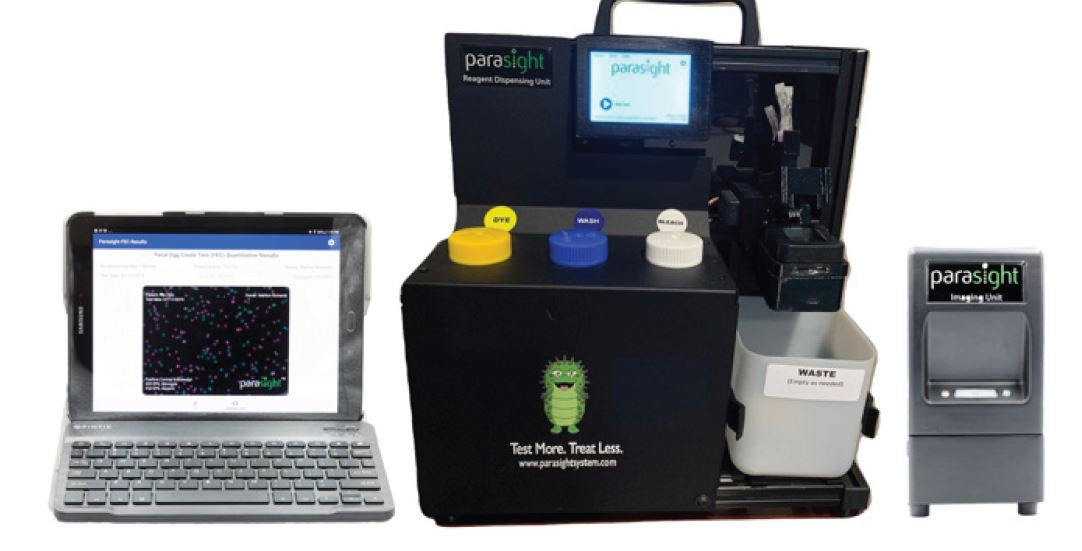
In the context of increasing drench resistance, the adoption of more advanced diagnostic tools has become essential. You may be familiar with the Parasight Systems we have been using in clinic over the past several years; we are now in a position to share key findings from real world data collected from our client base. These results demonstrate how we are using Parasight, not only to manage drenching programmes more effectively, but also to address, with greater accuracy and confidence, the emerging challenge of drench resistance in New Zealand.
So, why Parasight?
Approximately four years ago, we made a strategic decision to move away from traditional manual faecal egg count (FEC) methods, which were slow and lacked the sensitivity required to accurately assess drench efficacy. In response, we invested substantially in multiple Parasight Systems across key clinics with the highest FEC workloads. Informed by research from world renowned parasitologist Ray Kaplan, we recognised that, by combining a more sensitive, precise, and accurate testing platform with our clinical expertise, we would deliver significantly improved drenching and resistance outcomes for our farmers – and this has proven to be the case in practice.
Sensitivity is a critical parameter when assessing drench resistance. In diagnostic terms, sensitivity refers to the lowest level at which a test can reliably detect what it is designed to measure. A standard manual FEC (McMaster) test typically detects parasite eggs down to 50 eggs per gram (epg), meaning that a reported result of “zero” does not necessarily indicate the absence of eggs; rather, it indicates that the egg count is below the 50 epg detection threshold.
By contrast, Parasight detects down to 5 epg, providing a much more accurate representation of true post treatment egg counts and, therefore, drench performance. Over the past 12 months, our Parasight systems have recorded 1,724 zero results, confirming on 1,724 occasions that the recommended drenches were fully effective at the level of detection used.
In the same period, 1,920 drench check results fell between 4 epg and 49 epg. This 4–49 epg range is particularly important, as it encompasses low level infections that standard manual methods, which bottom out at 50 epg, would report as “zero.” In such cases, manual testing may falsely suggest that animals are parasite free when eggs are still present at low but meaningful levels.
This difference in detection capability is critical for robust drench resistance testing. Even very low post-drench egg counts can represent an early indicator of emerging resistance. Parasight’s 4–5 epg sensitivity allows us to identify these low level infections at an earlier stage, to perform Faecal Egg Count Reduction Tests from lower baselines, and to reduce unnecessary exposure of sheep to higher parasite burdens. For producers, this has translated into earlier identification of resistance and the ability to develop strategic, integrated drenching programmes that intervene sooner and help slow the progression of resistance within flocks.
If you would like to better understand your current drench resistance status, or explore how Parasight-based monitoring could be incorporated into your drenching programme, please contact your local clinic team to discuss testing options and tailored recommendations.


