

Ivan is a senior veterinarian &
our production animal business manager.
Calving is now upon us, and, while it is hard to think very far forward when you are in the mire of breaking in new heifers, you should already be thinking about mating and how you can maximise conception rates.
Transition management is a key first step, and a well-considered transition from winter feed for your springer mobs is critically important. Poorly transitioned cows will be slower to recover rumination rate post calving, and this could potentially lead to a higher incidence of hypocalcaemia or at least subclinical hypocalcaemia. Poorly transitioned cows will have more endometritis and, as such, will return to oestrus later. Carrying out energy checks to ensure cows are not sitting in energy deficits is a good measure of how successful your spring calving management is tracking. Again, cows in either a ketotic state or even in subclinical ketosis, will cycle later and get in calf later. None of it is great for maximising conception rates.
One of the many interesting data sets that has come out of CowSmart data, is the conception rate to a cow’s first insemination relative to how many heats she had had prior to AI. The graph below combines data from over 3,000 matings across six farms in Canterbury and Central Otago, and all first matings on these farms are included.
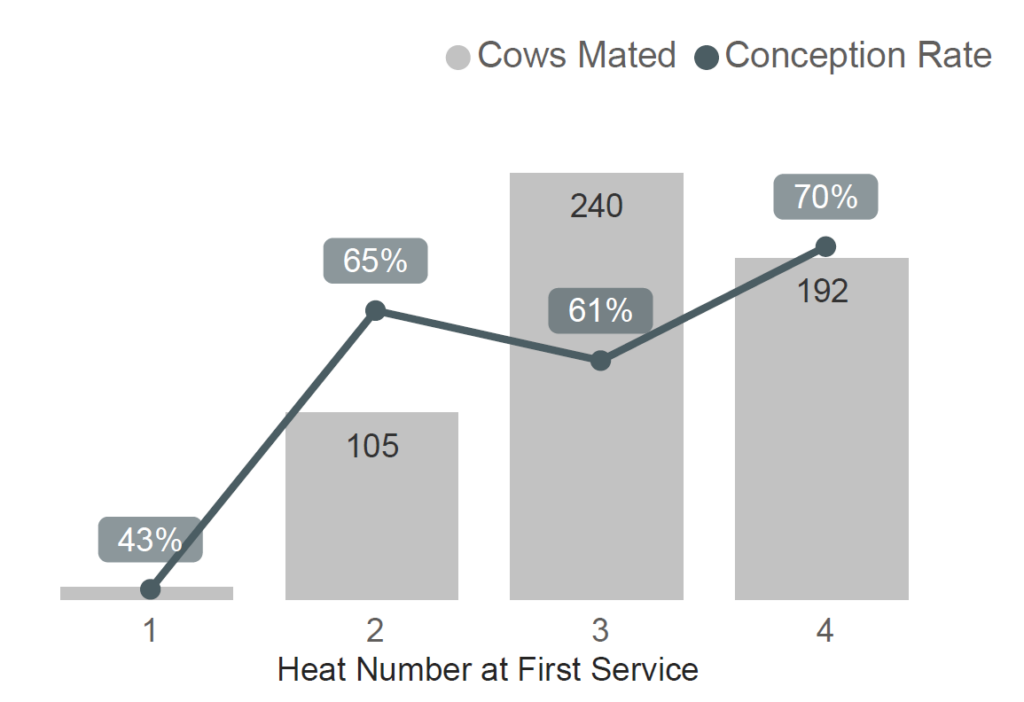
The graph above clearly shows that the increase in conception rate, as the number of heats the cow has had prior to first service, increases. Conception rate increases from around mid-40 percent to early-to mid-60 percent if mated for the first time on their second or subsequent heats.
We can use this data to assist to manipulate and improve our first service conception rates. So often we focus on the non-cycler cows and ignore the “Good” cycling cows. Do not get me wrong, we should focus on non-cycling cows, but I would suggest that we should not forget the good cows as well. Using the conception-to-service data, any heats created in the pre-mating period will lead to a successive heat early in the mating period, which by nature will lead to a higher conception rate. A simple and well-worked approach in Vetlife for a number of years is to inject cows with prostaglandin approximately three weeks out from the planned start of mating.
The cows that respond and have a heat should then return to a second but natural heat during the first week of mating. This heat, by nature, will be more fertile, leading to a higher conception rate. A higher conception rate means better use of semen resource along with more days in milk in the subsequent season, which equates to more money.
The secondary effect is with the cows that do not respond to the PG. These are your non-cyclers, which can be identified and then put in an appropriate programme to ensure they are mated as early as possible in the mating period.
Just which cows are put up to the early PG programme is a discussion to have with your Vetlife veterinarian, but generally it should be about the good cows that have calved during the first six or seven weeks of calving.
This process has lifted first-service conception rates across many client farms over the past few years. However, it is important to plan well for next season. You are likely to have more calves on the ground earlier than usual, so make sure you have the right resources in place, including adequate shed space, experienced calf rearers, and enough feed for the increased number of early-calved cows.
If this article interests you, please contact your Vetlife veterinarian to discuss these approaches further, so as to ensure a sustainable plan is set up for you this season.
Key takeaway:
Strong conception rates start well before mating begins. Effective transition management, early identification of cycling cows, and strategic use of pre-mating heats can improve first-service conception rates, increase days in milk, and lift overall herd productivity.


