
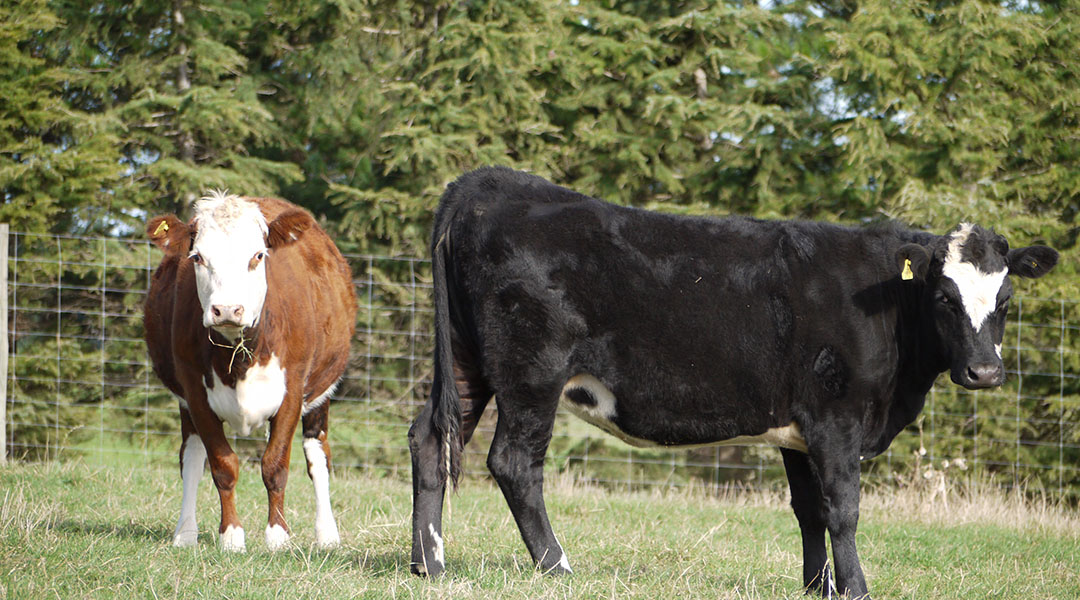
Managing Beef Cows Before and After Mating
Getting cows in calf early and in good numbers is one of the strongest drivers of profitability in a beef herd. Two key performance goals are high pregnancy rates and a tight calving spread, both of which depend on how cows are managed in the weeks before and after the planned start of mating.
Body condition and nutrition
Body condition score (BCS) has one of the biggest impacts on conception rates. We should be aiming to have cows at BCS 6 at the start of mating (RR 1-10). Cows should calve around BCS 5 and maintain or slightly gain weight through to mating.
Checking BCS at least 6–8 weeks before mating allows time to lift lighter cows. Rapid feeding boosts close to mating are less effective. First-calving heifers need particular attention as they are still growing and lactating.
Trace elements and minerals
Trace element status plays a significant role in reproductive success. Deficiencies in copper, selenium, iodine or cobalt can delay cycling, lower conception rates, and increase early embryo loss. These issues are often subclinical, so regular blood or liver testing helps identify deficiencies before they affect performance.
Supplementation should be based on regional risk, recent soil or herd testing, and farm history, not just routine use. Pre-mating is an ideal time to check trace element status, so that any corrections can be made well before bulls go out.
Calving-to-mating interval
Cows need time after calving to resume normal cycling. To maintain a 365-day calving interval, cows need roughly70–80 days between calving and the planned start of mating. This allows the uterus to recover and the cow to return to normal cycling. Cows that calve late, or lose too much condition after calving, are more likely to miss the next cycle, widening the calving spread.
Recording calving dates allows you to identify late calvers early and to make better management decisions before mating, e.g. using short gestation bulls.
Bull management
Healthy, fertile bulls are critical for herd performance. All bulls should have a pre-mating check 6–8 weeks before the planned start of mating. A breeding soundness exam and semen test can confirm fertility and prevent costly empty rates later on.
Bulls should be fit and sound, not over-fat, and vaccinated for key reproductive diseases. All bulls should be tested BVD-negative and vaccinated before mating, because reproductive diseases can quietly erode herd fertility.
Post-mating monitoring and records
Pregnancy scanning about 6–8 weeks after the mating period gives valuable feedback on conception rates and identifies empty or late cows at an early date. B+LNZ benchmarks suggest aiming for at least 95% of cows in calf within a 63-day mating period. Culling empty cows or managing them separately helps reduce feed demand and tighten future calving.
Recording calving and mating dates, BCS and scanning results, gives valuable insight into herd performance. Tracking this data year-to-year highlights which management changes are working best.
Strong fertility and compact calving come down to practical fundamentals, i.e. good body condition, balanced nutrition, adequate trace elements, enough time between calving and mating, and sound bulls. Getting these basics right sets up the herd for a more