What Mooving Day means for your farm
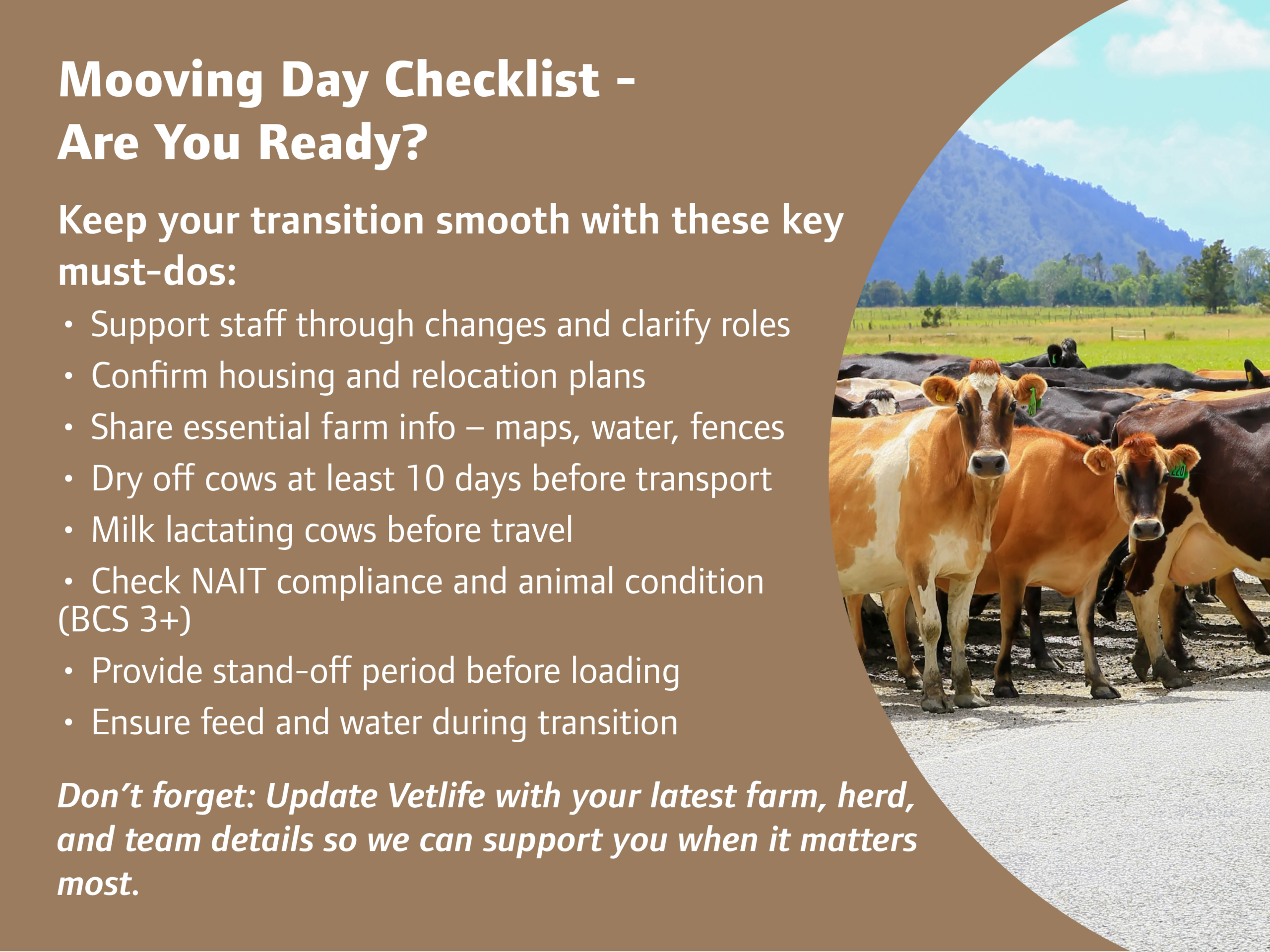
Mooving Day involves more than shifting stock – it impacts people, processes, and animal health. Preparing early and working through a clear checklist will help ensure a smooth transition.
Key areas to manage:
- Staff transitions: Changes in team structure can be stressful. Prioritise clear communication, role clarity, and wellbeing support for both departing and incoming staff.
- Housing and relocation: Coordinate moving logistics for outgoing and incoming teams. Supporting those relocating from outside the area helps them settle faster and strengthens team cohesion.
- Induction and expectations: Ensure new staff understand job responsibilities, farm systems, and expectations from day one.
- Farm information handover: Provide complete and up-to-date documentation, including:
-
- Farm maps and paddock layouts
- Water systems and infrastructure
- Powered fence locations
- Hazard information.
Animal health and welfare checklist for Mooving Day
Livestock movement requires careful planning to reduce stress and maintain production and health.
Before transport:
- Dry off cattle at least 10 days before transport
- Milk lactating cows prior to loading
- Ensure pregnant animals have adequate feed and water
- Confirm all animals are NAIT compliant
- Check all stock are Body Condition Score (BCS) 3 or higher, fit, and healthy
At loading:
- Provide a stand-off period of at least four hours before transport
- Minimise stress through calm handling and appropriate loading practices.
During transition:
- Maintain access to water and feed
- Monitor animals closely on arrival for signs of stress or illness.
Mooving Day compliance and planning resources
If you are unsure about any requirements, the following organisations provide reliable guidance:
What Mooving Day means for Vetlife clients
At Vetlife, accurate and up-to-date client information helps us deliver timely, effective on-farm support.
To provide the best service, we maintain records including:
- Contact details – landline, mobile, and email
- Staff roles and responsibilities (e.g. manager, sharemilker, herd manager or calf rearer)
- Farm locations and dairy supply numbers
- Run-off block details
- Herd size and breed composition.
Keeping this information current ensures we can:
- Get the right vet to the right place quickly
- Support animal health planning and preventative care
- Communicate effectively with your team.
If your staff, farm structure, or contact details are changing this Mooving Day, please let us know.
A message to our farming community
To those moving on – thank you for your partnership, and we wish you every success in your next venture.
To those joining the region – welcome. We would love to meet you, so feel free to visit your local Vetlife clinic and introduce yourself.